Captive Insurance Company
A captive insurance company sounds like something only big corporations would own. For a lot of home service businesses, it’s the fix for a warranty leak they don’t even know they have. My guest once sat next to an HVAC owner who put a third party HVAC warranty on every unit he sold. He paid about $400 a unit on roughly 1,500 units a year. That’s $600,000 a year out the door. His claims didn’t come anywhere close.
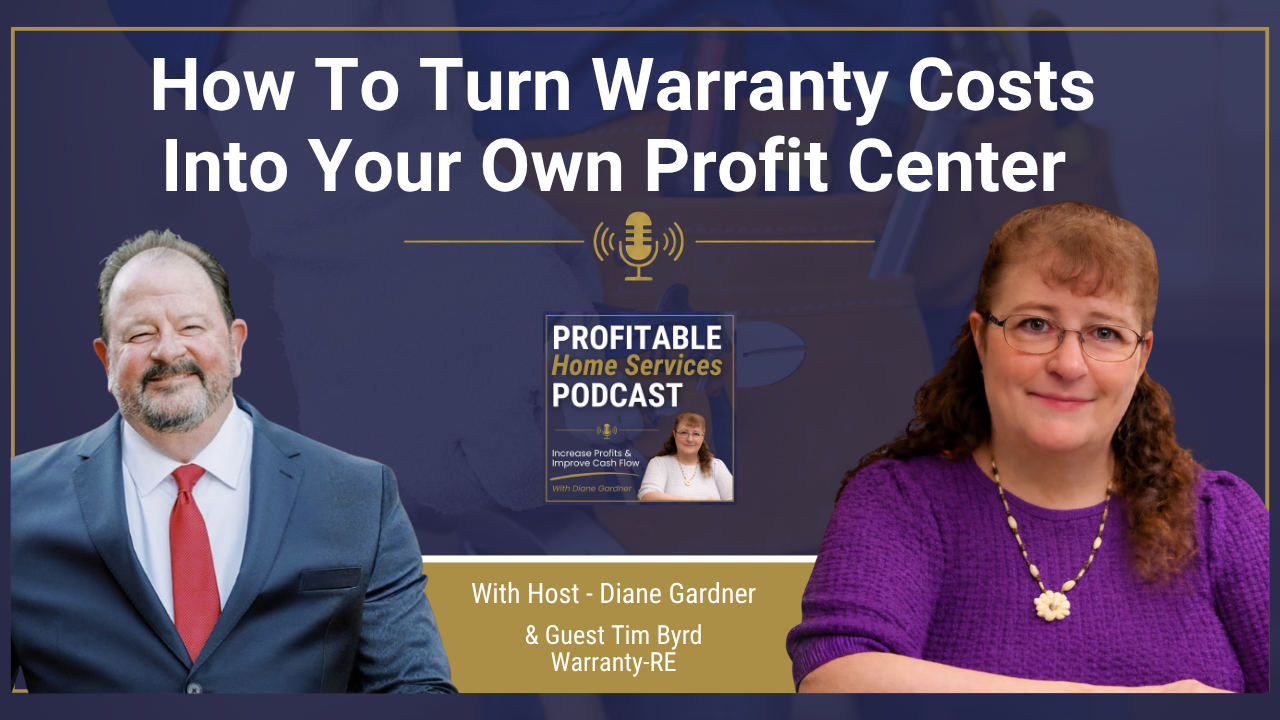
I loved talking with Tim Byrd of Warranty-RE about this. Tim has spent 32 years helping car dealers set up and own their own warranty companies. Now he’s bringing that same model to home service. Keep reading to see how a captive insurance company works, how the tax side plays out, and why self insurance can turn a cost into a profit center.
What You’ll Learn
- Why a third-party warranty company will never pay back what you send in
- How a captive insurance company keeps your warranty premiums working for you
- The one tax rule that lets up to $2.9 million a year sit untaxed
- What most owners miss about an HVAC service contract versus a warranty
- When contingent liability from 3,000 old warranties can stall your business sale
- Which trades qualify today and why others are still waiting on data
- Where one owner found the money to fund his son’s home without a bank
Key Moments…
[1:51] The HVAC Owner Sending $600K A Year Away
[4:44] What A Captive Insurance Company Really Is
[8:47] Why Setting Money Aside Yourself Still Costs Taxes
[10:58] Warranties Vs Service Contracts Vs Maintenance Agreements
[15:51] How Premiums Turn Into Underwriting Profit
[16:49] Why HVAC And Roofing Qualify First
[21:54] How Contingent Liability Can Stall A Business Sale
[23:13] How $1.8M In Premiums Becomes $1.5M You Keep
[31:11] Lending Your Son Money For A House
[33:50] The Profit Leak Behind Cash Flow And Tax Problems
How A Captive Insurance Company Can Help Home Service Businesses Keep More Profit
For many HVAC and roofing companies, warranty costs are simply accepted as part of doing business. A customer calls with a problem, a technician gets sent back out, and the company absorbs the labor and overhead from current cash flow.
But for companies with enough warranty volume, there may be another way to handle that risk.
A captive insurance company is a separate insurance company owned by the business owner whose risks it is designed to insure. In the type of structure discussed with Timothy Byrd of Warranty RE, qualifying home service companies can fund certain warranty obligations through their own warranty or reinsurance company instead of automatically sending all of that money to a third-party provider.
That does not eliminate warranty costs. It changes where the money goes, how future claims are funded, and what may happen to the money that is not ultimately needed for claims.
What Is A Captive Insurance Company?
A captive insurance company is not simply a savings account set aside for future repairs. It is a separate insurance entity that has to be established and operated properly, with premiums tied to real jobs and legitimate warranty risk.
For a home service company, that risk is easy to understand. You may install a system today and not know whether that customer will need warranty work six months or several years from now. If they do, the company may have to send a technician back out, cover labor, use a truck, and pull that employee away from another revenue-producing job.
Byrd has worked with captive and reinsurance structures for more than 30 years, primarily in the automotive industry, and now applies that model to qualifying HVAC and roofing companies. Pasted markdown
The key point is that the captive exists to insure an actual business risk. The company needs to be treated as a separate entity, not as another operating account the owner can move money in and out of casually. Pasted markdown
How Warranty Costs Can Become A Hidden Profit Leak
One of the strongest examples from the conversation involved an HVAC company installing approximately 1,500 units per year and paying about $400 per unit to a third-party warranty provider.
That adds up to roughly $600,000 a year in warranty premiums.
According to Byrd, the contractor was not receiving anywhere close to that amount back in paid claims. That is where the financial question becomes interesting. A third-party warranty company needs to collect more in premiums than it pays out in claims in order to stay profitable. But if your company is sending hundreds of thousands of dollars out every year, it is worth examining whether there is a better way to fund that risk. Pasted markdown
The warranty itself is not necessarily the profit leak. The leak may be in the way the business has always paid for it.
There is also the cost of callbacks that never shows up neatly under one line item. A warranty repair can mean technician wages, truck expenses, fuel, overhead, and lost capacity because that technician is no longer working on a paying job.
That is why warranty costs can quietly drain profit even when no single callback seems especially expensive.

How A Captive Insurance Company Can Build A Reserve
The basic insurance model is straightforward: premiums come in, claims are paid, and any remaining funds stay within the insurance company.
Using the same $600,000 annual example, three years of premiums would total $1.8 million. If $300,000 were paid out in claims during that time, approximately $1.5 million would remain.
That is only an illustration, not a guaranteed outcome, but it shows the financial difference between owning the insurance structure and sending all of the premium to a third party. Pasted markdown
Byrd compared it to stacking firewood. You keep adding pieces to the pile, and when you need one, you take one out. The reserve is there because you built it before the need arose.
For a home service company with enough warranty volume, that changes how the expense can be viewed. Instead of every warranty dollar leaving the business permanently, some of the unused premium may remain inside a separate company designed specifically to handle future claims.
Why Warranty Obligations Matter When You Sell The Business
Warranty planning is not only about current cash flow. It can also affect the future sale of the company.
Byrd shared an example involving HVAC owners in Florida who had been in business for roughly 50 years and had about 3,000 outstanding warranties when they began looking at selling the business.
Those warranties represented contingent liability because somebody still had to remain responsible for honoring the promises already made to customers. According to Byrd, the prospective buyers did not want to assume that liability. Pasted markdown
That makes warranty planning part of exit planning.
If your operating company remains responsible for years of outstanding warranty promises, those obligations may follow the business into a future sale. A properly structured warranty or reinsurance arrangement can create a clearer mechanism for funding those future claims rather than leaving all of that responsibility inside the operating company.
Look At Your Warranty Costs As A Financial System
A captive insurance company will not make sense for every home service business. The company needs enough warranty volume and financial scale to justify the structure, and the legal, insurance and tax details have to be evaluated carefully.
But there is a valuable exercise here for any HVAC or roofing owner.
Look at:
- How much you are paying each year to third-party warranty providers
- How much callback labor is costing you internally
- How much future warranty responsibility is still sitting inside the business
Then ask whether the current structure is really the most profitable way to handle that risk. The hidden profit leak may not be the warranty itself. It may be the financial system you are using to pay for it.
About Tim
Tim Byrd started WarrantyRE in 1994 in Southeast Virginia and has been helping business owners expand their warranty programs to be more efficient and profitable ever since. WarrantyRE is a family company that is built on the foundation of Jesus Christ and the word of God.
WarrantyRE operates alongside its sister company, DealerRE, bringing decades of reinsurance experience from the automotive industry into the home service space.
Connect With Timothy Byrd:
Visit Timothy’s Website
Follow Timothy on Instagram
Connect with Timothy on LinkedIn
Follow with Warranty-RE on LinkedIn
Follow Warranty-RE on Facebook
Follow Timothy on YouTube
FAQs About Captive Insurance Companies
What is the difference between a warranty and a service contract?
A warranty comes with the product, while a service contract is purchased separately for additional coverage. Maintenance agreements are different again and generally cover ongoing service rather than a specific warranty obligation.
Does a captive warranty company share risk with other contractors?
Not in the structure described by Timothy Byrd. He explained that each company is standalone, with only that contractor’s customer premiums going in and its customer claims coming out. Pasted markdown
Which home service businesses can currently use this warranty structure?
Byrd said Warranty RE currently offers this particular reinsurance structure to HVAC and roofing companies across the United States because those industries have the actuarial and regulatory support needed for the program. Pasted markdown
Can this captive insurance structure be used in Canada?
Not in the same form described in the episode. Byrd said Canadian laws are different, although other types of arrangements may potentially be available.
Diane’s Resources:
🤑Add $200k in Profits Without Chasing Leads
Sales are rolling in, so why does your business still feel broke? Here are 15 ways to add profit back into your Home Service Business without more leads & sales. https://profitcoach4you.com/profitleaks
Profit Impact Call
☎️ Let me find $45k in hidden profit leaks in your home service business in 45 minutes during a Profit Impact Call. https://taxcoach4you.com/profitimpactcall/
Profit Impact Call
Would you spend 45 minutes to find $45k? That’s what will happen when you book a Profit Impact Call. I will walk you through a live profit assessment across twelve key areas of your business where I routinely find $45k or more in missed profit. You can schedule a call at https://taxcoach4you.com/profitimpactcall/